Chemical Applications in Edible Crop Production
Benefits, Risks, and Sustainability Considerations
DOI:
https://doi.org/10.64591/wjwtmq06Keywords:
Agricultural Chemicals, Food Security, Sustainable AgricultureAbstract
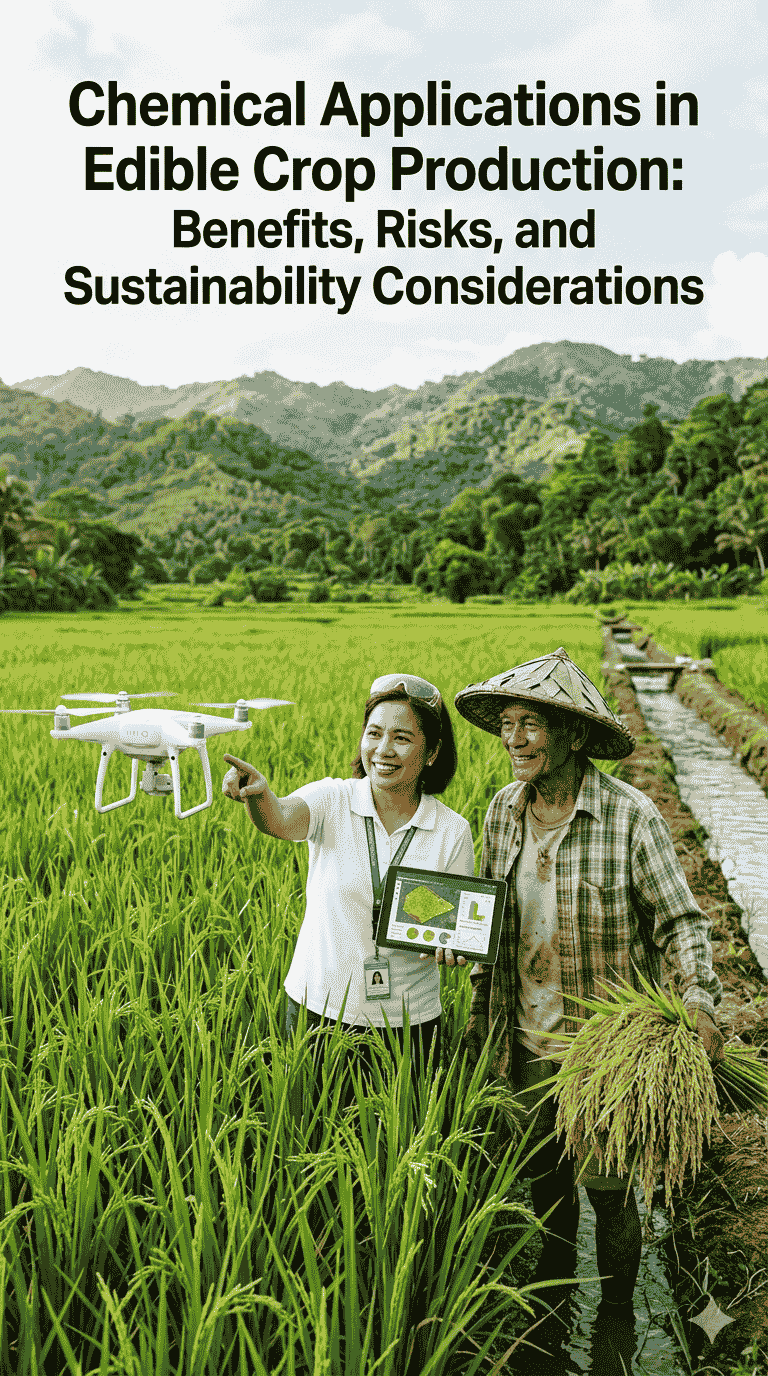
Chemical applications such as fertilizers, pesticides, herbicides, and plant growth regulators play a vital role in increasing edible crop productivity and supporting global food security. However, their extensive use can contribute to environmental degradation, biodiversity loss, water contamination, and potential human health risks. This paper examines the benefits and challenges of agricultural chemical use and highlights sustainable approaches, including precision agriculture, integrated pest management, bio-based inputs, and sustainable intensification, to balance agricultural productivity with environmental stewardship.
References
Foley, J. A., Ramankutty, N., Brauman, K. A., Cassidy, E. S., Gerber, J. S., Johnston, M., ... & Zaks, D. P. (2011). Solutions for a cultivated planet. Nature, 478(7369), 337–342.
Godfray, H. C. J., Beddington, J. R., Crute, I. R., Haddad, L., Lawrence, D., Muir, J. F., ... & Toulmin, C. (2010). Food security: The challenge of feeding 9 billion people. Science, 327(5967), 812–818.
Oerke, E. C. (2006). Crop losses to pests. The Journal of Agricultural Science, 144(1), 31–43.
Pimentel, D. (2005). Environmental and economic costs of the application of pesticides primarily in the United States. Environment, Development and Sustainability, 7(2), 229–252.
Pretty, J. N., Williams, S., & Toulmin, C. (2012). Sustainable intensification: Increasing productivity in African food and agricultural systems. London, England: Routledge.
Tilman, D., Cassman, K. G., Matson, P. A., Naylor, R., & Polasky, S. (2002). Agricultural sustainability and intensive production practices. Nature, 418(6898), 671–677.
Downloads
Published
Issue
Section
License
Copyright (c) 2026 SCI-TECH LENS

This work is licensed under a Creative Commons Attribution 4.0 International License.
How to Cite