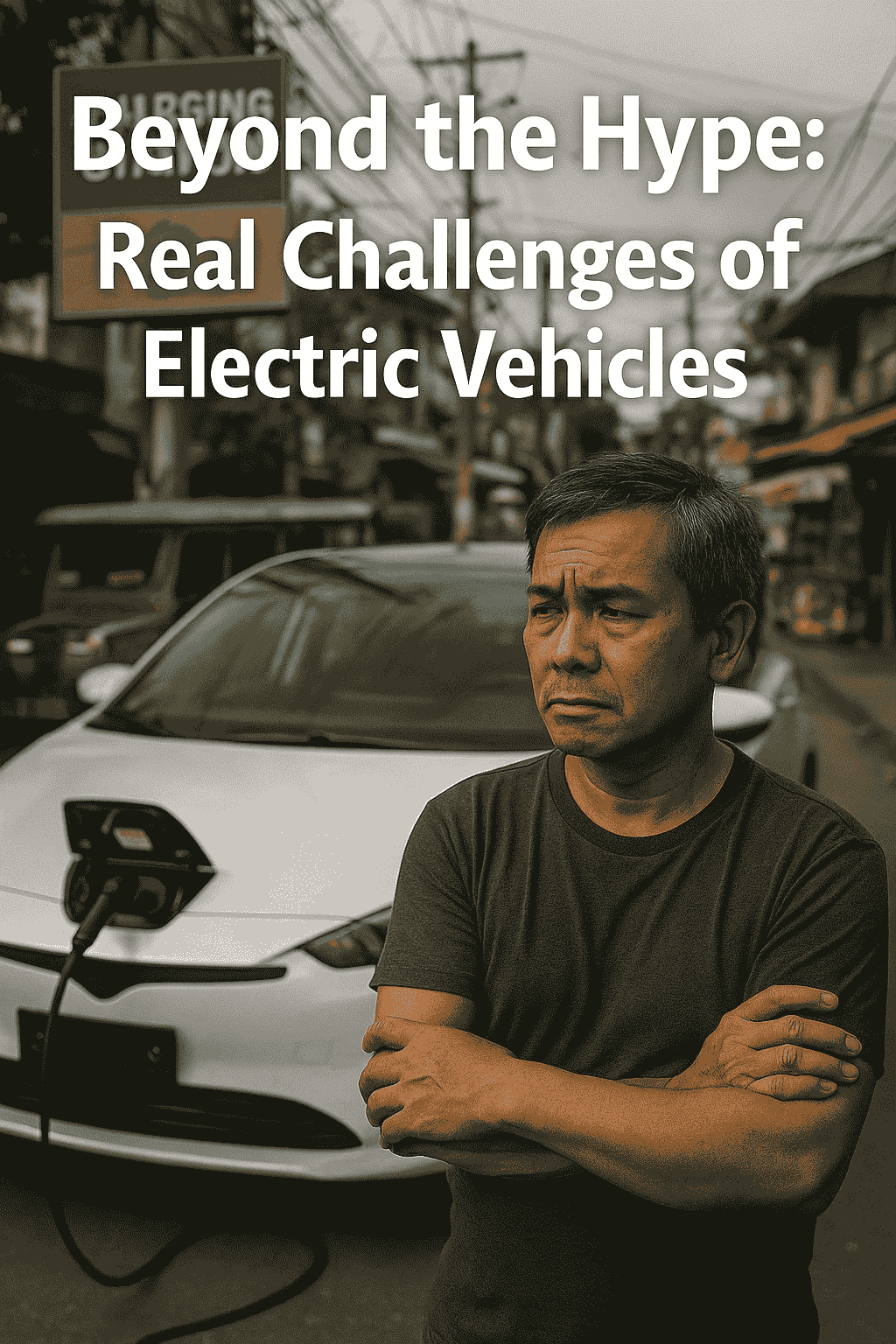
Beyond the Hype
Real Challenges of Electric Vehicles
DOI:
https://doi.org/10.64591/hfdxns51Keywords:
Electric Vehicles, Charging Infrastructure, Battery ChallengesAbstract
This paper examines the challenges and opportunities surrounding the adoption of electric vehicles (EVs) in the Philippines. While EVs offer environmental and economic benefits, including reduced emissions and lower operating costs, their widespread implementation faces barriers such as limited charging infrastructure, high battery costs, and dependence on global supply chains. Addressing these obstacles requires policy support, infrastructure expansion, and technological innovation tailored to the Philippine context.
References
Alanazi, F. (2023). Electric Vehicles: Benefits, Challenges, and Potential Solutions for Widespread Adaptation. Applied Sciences, 13(10), 6016. https://doi.org/10.3390/app13106016
Cabarrubias, K., & Tolentino, L. K. (2023). Unlocking the market potential of electric vehicles in the Philippines: A statistical and neural network approach to customer willingness to purchase electric vehicles. International Journal of Innovative Research and Scientific Studies, 6(4), 888–902. https://doi.org/10.53894/ijirss.v6i4.2088
Lu, P., Hamori, S., Sun, L., & Tian, S. (2024). Does the electric vehicle industry help achieve sustainable development goals?—evidence from China. Frontiers in Environmental Science, 11, 1276382. https://doi.org/10.3389/fenvs.2023.1276382
Tan, J., & Keiding, J. (2023). The cobalt and lithium global supply chains: status, risks and recommendations. https://doi.org/10.22008/gpub/32050
Uy, J., Ong, A. K., & German, J. (2024). Marketing strategy and preference analysis of electric cars in a developing country: A perspective from the Philippines. World Electric Vehicle Journal, 15, 111. https://doi.org/10.3390/wevj15030111
Downloads
Published
Issue
Section
License
Copyright (c) 2025 SCI-TECH LENS

This work is licensed under a Creative Commons Attribution 4.0 International License.
How to Cite